English
 Français
 Español
 Português
 中国人
中国人
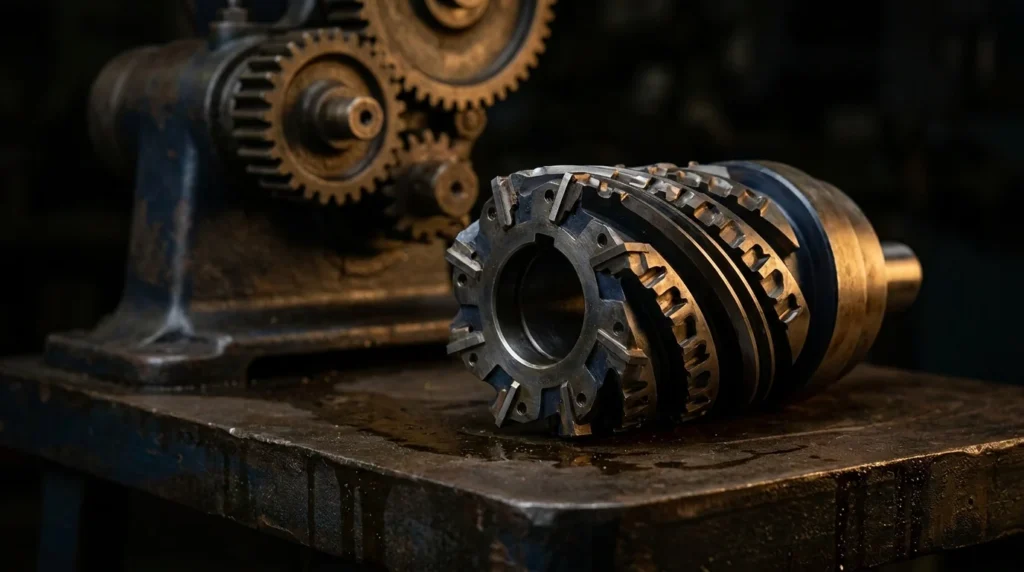
Every woodworking shop eventually runs into a job that doesn’t fit neatly into the catalog. The profile is unusual. The machine is old. The material is difficult. The tolerances are tighter than anything a standard tool can hold. In those moments, custom moulder knives and purpose-ground cutting tools stop being a specialty option and become the only practical path forward.
At CGG Schmidt, we’ve been making custom tooling since 1926. Over nearly a century, we’ve seen a lot of unusual problems — and we’ve solved most of them. Here’s a look at the kinds of challenges custom tooling addresses, illustrated with the sorts of situations shops bring to us regularly.
The Odd Profile Nobody Stocks
Some profiles simply don’t exist in any standard catalog. This comes up in several contexts.
Imagine a millwork shop hired to produce a distinctive window casing for a commercial project. The architect’s detail calls for a profile that combines a wide ogee, a deep cove, and a narrow bead in a specific sequence — nothing in any manufacturer’s lineup matches it. Running it in multiple passes with standard tooling is possible, but it multiplies setup time, increases the chance of registration errors, and adds cost to every linear foot. A single custom knife ground to the full profile runs it in one pass, cleanly and consistently.
Or consider a furniture maker producing a signature cabinet leg detail that appears on every piece they sell. That profile is part of their brand — it’s what makes their work recognizable. Running it on a standard knife that any competitor can also buy undercuts that distinctiveness. A custom-ground knife for that profile is their tooling, matched to their spec, and it runs the same every time.
Custom tooling makes unusual profiles repeatable and efficient. That’s its fundamental value.
Matching Legacy or Discontinued Profiles
Restoration and renovation work brings a steady stream of profiles that simply aren’t made anymore. A contractor working on a historic building finds water-damaged crown molding that needs to be replaced along a sixty-foot run. The profile is clearly pre-war — graceful, complex, and found in no current catalog.
The solution is to send us a clean sample section, or a careful tracing with key dimensions, and let us reverse-engineer the knife. We can grind a profile knife that reproduces the original geometry, so the new material matches the existing work seamlessly.
This is one of the most common types of custom jobs we see, and it’s one of the most satisfying — because the alternative is often leaving a restoration incomplete or substituting a profile that doesn’t quite match. Neither outcome is acceptable on quality work.
Tooling for Unusual or Legacy Machines
The woodworking industry has a long history, and a lot of the machines in that history are still running. Older shapers, molders, and tenoners sometimes use head configurations — corrugated back specs, bore sizes, key dimensions — that don’t match current standard tooling. Shops that run these machines often find their options narrow quickly when they need a profile beyond the most basic cuts.
Custom tooling is frequently the answer. We manufacture knives for a wide range of head types, including corrugated back configurations, and we can work with the specs of older or non-standard machines. If you’re running legacy equipment and finding it hard to source tooling, it’s worth a call to us before you assume you’re out of options.
Think about a small production shop that’s been running the same older planer-moulder for twenty years. The machine runs beautifully, they know it inside and out, and there’s no business case for replacing it. But a new run of custom cabinet components calls for a profile that standard tooling for that machine doesn’t cover. A custom knife ground to the machine’s head spec solves the problem without requiring a capital equipment decision.
Difficult Materials and Special Geometry
Not all custom tooling challenges are about the profile shape. Sometimes the challenge is the material.
Hardwoods like hard maple, hickory, and certain exotics are abrasive and demanding — they’ll wear down a general-purpose knife geometry faster than softer species, and they’re punishing of any geometry that isn’t optimized for the cut. Engineered materials like MDF, particleboard, and high-pressure laminates have their own demands, particularly on cutting edges that need to resist dulling from abrasive resins and particles.
For these applications, custom tooling can mean the right steel grade for the job — S-Alloy for demanding hardwood cuts, carbide-tipped edges where abrasion resistance is the priority — combined with geometry optimized for the specific material. The result is better finish quality, longer tool life between sharpenings, and less downtime. For a high-volume shop running abrasive materials, that difference in tool life can be significant over a production year.
Tight Tolerances and Critical-Fit Work
Some applications require a level of precision that standard tooling, with its manufacturing tolerances, doesn’t reliably deliver. This is particularly true in applications where multiple components need to fit together precisely — tongue-and-groove joinery in flooring or paneling, matched cope-and-stick profiles for door components, or gang setups where multiple knives need to run in close coordination.
On these jobs, a knife that’s off by a few thousandths of an inch in a critical dimension produces parts that don’t assemble correctly, or that require hand-fitting to compensate. That cost adds up fast on a production run.
Custom tooling ground to tight tolerances and inspected on a high-powered optical comparator — which is how we verify every custom knife before it ships — gives you the confidence that the tool matches the spec. We can see deviations at this level of magnification that would be impossible to catch by eye or with basic measurement tools.
The Value of a Problem-Solving Partner
What these examples share is a common thread: a shop with a real need that standard tooling couldn’t address. In every case, the custom tooling solution was more practical and more economical than the alternatives — turning down work, over-engineering a multi-step workaround, or running with tools that compromised quality.
That’s how we think about custom tooling at CGG Schmidt. Not as a premium add-on for unusual circumstances, but as a practical tool for getting difficult jobs done right. We’ve been doing this long enough to have seen most of the problems that come through the door — and we’re genuinely interested in the ones we haven’t seen before.
If you’ve got an unusual woodworking challenge — a profile nobody stocks, a machine with non-standard specs, a material that’s hard on tooling, or a tolerance requirement that standard tools can’t meet — we’d like to hear about it. Call us at 1-800-SCHMIDT, email sales@cggschmidt.com, or send us a sketch, sample, or DXF. Bring us your toughest job.