English
 Français
 Español
 Português
 中国人
中国人
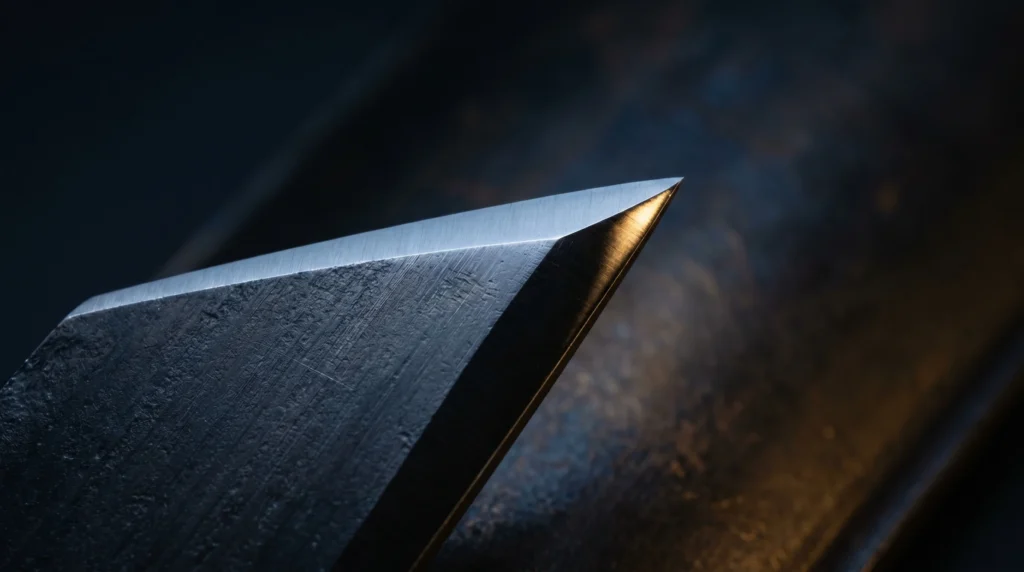
When woodworkers and shop managers start comparing cutting tools, the conversation often centers on carbide versus high-speed steel. That’s a reasonable starting point — but it skips over a material that has been quietly delivering excellent results in woodworking environments for more than six decades: S-Alloy. At Charles G.G. Schmidt & Co., we’ve been working with S-Alloy longer than anyone else in the trade, and we think it deserves a clear, honest explanation.
What Exactly Is S-Alloy?
S-Alloy belongs to the broader family of high-speed tool steels — alloys specifically engineered to hold a sharp edge at elevated temperatures and under heavy cutting loads. The distinguishing characteristic of S-Alloy is its particular combination of alloying elements, most notably a higher proportion of certain carbide-forming constituents that refine grain structure and boost both hardness and toughness compared to conventional high-speed steels.
In plain terms: a well-made S-Alloy tool is harder than standard steel, which means it holds an edge longer; and it is tougher than a purely brittle material, which means it can handle the intermittent shock loads that woodworking routinely produces — knots, grain reversals, varying density within a single board.
How S-Alloy Stacks Up Against Standard Steel
Standard high-speed steel (often designated M2 or similar grades) has served woodworking shops for generations, and for good reason — it is readily resharpened, relatively forgiving, and widely available. But it has real limitations. Edge retention under sustained production runs is modest, and in demanding applications — moulder operations, long planer runs, high-feed shaper work — you may find yourself stopping to resharpen or rotate knives more often than you’d like.
S-Alloy addresses those limitations without abandoning the practical benefits of steel. Because the alloy’s microstructure is refined at a finer grain level, the cutting edge holds its geometry longer before rounding off perceptibly. In typical production scenarios, users often report noticeably extended intervals between resharpenings compared with standard steel, though exact results vary with species, feed rate, and machine condition. Critically, S-Alloy tools can be resharpened using conventional grinding equipment — something that is not always straightforward with carbide.
How S-Alloy Stacks Up Against Carbide
Carbide-tipped and solid carbide tools occupy the high end of the durability spectrum. For applications involving highly abrasive materials — MDF, particleboard, composite panels, or very long runs of hardwood — carbide’s wear resistance is genuinely difficult to match. But carbide is brittle. It is less tolerant of impact, interrupted cuts, and the occasional hidden nail or inclusion. It also requires diamond wheels and skilled technique to resharpen correctly.
S-Alloy sits in a productive middle ground. It offers edge retention that meaningfully surpasses standard steel and tolerates impact and intermittent load better than carbide. For shops running varied work — custom millwork, architectural mouldings, furniture components in mixed species — S-Alloy woodworking tools often deliver an excellent cost-per-cut value, because the tools last longer than standard steel and are simpler and less expensive to resharpen than carbide.
Ideal Applications for S-Alloy
S-Alloy is particularly well-suited to:
- Moulder and shaper operations producing architectural profiles, where the tool must hold a precise edge across a full production run
- Custom profile work where resharpening to exact geometry is important and needs to be done efficiently in-house
- Shops with mixed species, including domestic hardwoods, where toughness and edge retention both matter
- Operations where tool change-out time is a real cost, making longer edge life directly valuable
It is less ideal for very high-volume runs on abrasive composites or sheet goods, where carbide’s superior wear resistance generally justifies the added cost and handling care.
CGG Schmidt’s History with S-Alloy
Charles G.G. Schmidt & Co. was the first manufacturer to adapt S-Alloy for woodworking cutting tools, doing so in the early 1960s. That was not a small step. At the time, S-Alloy had proven itself in metalworking applications, but applying it to the geometry, heat treatment requirements, and operational demands of woodworking tools required genuine engineering work. We did that work, refined the process, and brought S-Alloy woodworking tools to market — and the broader industry followed.
More than 60 years later, S-Alloy remains a core part of what we do. Our manufacturing process — precision CNC grinding, rigorous heat treatment, tight dimensional tolerances — ensures that every S-Alloy tool leaving our shop performs the way the material is capable of performing. The alloy is only as good as the craftsmanship behind it.
The Bottom Line
S-Alloy is not a compromise choice. It is a deliberate one — chosen when you want edge retention that outlasts standard steel, toughness that outperforms carbide in impact-prone applications, and a resharpening process that fits the practical workflow of a real production shop. It has been doing exactly that for our customers since before most current CNC equipment existed.
If you’re evaluating tool materials for a new application or simply want to talk through whether S-Alloy, carbide, or standard steel is the right fit for your operation, we’re glad to help. Call us at 1-800-SCHMIDT or send an email to sales@cggschmidt.com — a conversation with our team costs nothing, and you’ll leave with a clearer picture of what your tools should be doing for you.