English
 Français
 Español
 Português
 中国人
中国人
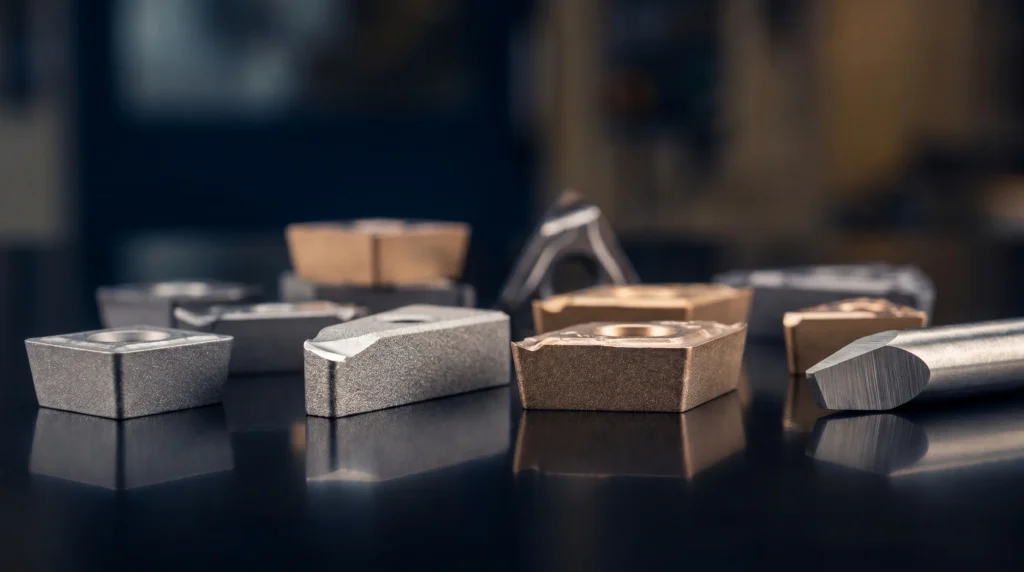
Carbide is not a single material. That’s the first thing worth understanding, and it’s a point that gets glossed over in a lot of tooling conversations. When a supplier says “carbide tipped,” that tells you something about the general material category — but it leaves open a wide range of variation in grain size, binder composition, and hardness that has real consequences for how the tool performs in your specific application. Matching carbide grades for woodworking to the right job is one of the most practical steps a shop can take to extend tool life and improve cut quality.
What Carbide Actually Is
Woodworking carbide is almost always tungsten carbide — a compound of tungsten and carbon — with a metallic binder, most commonly cobalt, that holds the carbide grains together. The result is a composite material: the tungsten carbide provides hardness and wear resistance, and the cobalt binder provides the ductility and toughness that keep the material from simply shattering.
Adjusting the ratio of carbide to binder, and adjusting the size of the carbide grains, produces materials with different combinations of hardness, wear resistance, and toughness. This is the engineering space within which carbide grades are defined.
Grain Size: Coarse, Medium, Fine, and Submicron
Grain size refers to the physical size of the tungsten carbide particles that make up the structure of the material. It is measured in micrometers and typically described as coarse (roughly 3–6 µm), medium (~1–3 µm), fine (~0.5–1 µm), or submicron (below ~0.5 µm).
Coarse-grain carbide has larger carbide particles separated by more binder. This produces a tougher material that absorbs impact well, but the large grain structure limits how sharp an edge it can take and hold. For woodworking applications that involve impact loading or interrupted cuts — work with knots, live-edge material, or rough-sawn lumber — coarse-grain grades offer some protection against edge chipping.
Fine and submicron carbide has very small carbide particles packed tightly together. This allows for a sharper edge that holds its geometry longer under abrasion. The trade-off is reduced toughness: fine-grain grades are more susceptible to chipping if they encounter impact or if the tool geometry is not well-supported. In smooth, consistent cutting applications — clean sheet goods, laminate, MDF — fine-grain carbide’s superior edge retention becomes a real advantage.
Medium-grain carbide sits between these poles and is the most commonly used grade in general-purpose woodworking tooling.
Binder Content: The Cobalt Variable
The cobalt binder content in woodworking carbide typically ranges from roughly 3% to 15% by weight, though specific grades vary. More cobalt increases toughness and transverse rupture strength — the material is less brittle and better at handling shock loads. Less cobalt increases hardness and wear resistance but reduces toughness.
This trade-off is not a flaw in the material; it is a design parameter. A tip optimized for abrasion resistance on MDF is intentionally different from a tip optimized for impact resistance on green or knotty wood. The goal is not to find the “best” carbide in an absolute sense, but to select the grade whose trade-offs are appropriate for the demands of the application.
Matching Grade to Material
This is where the practical decisions live. The table below summarizes general guidance for matching carbide grade characteristics to common woodworking materials.
| Material | Key Demands | Grain Size | Cobalt Content |
|---|---|---|---|
| Softwood (pine, fir) | Toughness, some abrasion | Medium | Medium (~10%) |
| Domestic hardwood | Edge retention, toughness | Medium–fine | Medium |
| Tropical / exotic hardwood | High wear resistance | Fine | Lower (~6–8%) |
| MDF / particleboard | Abrasion resistance | Fine–submicron | Low–medium |
| Melamine / laminate | Sharp edge, abrasion | Fine–submicron | Low |
| LVL / OSB / composites | Impact tolerance | Medium–coarse | Higher (~10–12%) |
| Solid surface / plastics | Abrasion, edge quality | Fine | Low–medium |
General guidance only. Optimal grade selection depends on feed rate, tool geometry, machine condition, and specific material formulations.
Why Tip Geometry and Brazing Matter Too
Selecting the right carbide grade is necessary but not sufficient. A premium carbide tip that is brazed improperly — with inadequate penetration, insufficient fillet, or the wrong braze alloy — will fail at the joint before the carbide itself wears out. Equally, a tip that is the right grade but ground to a geometry that leaves insufficient backing behind the cutting edge is asking the carbide to do something it is not designed to do.
This is why the manufacturing process behind a carbide-tipped tool matters as much as the material specification. EDM-precise carbide pockets ensure good contact and consistent braze joint geometry. CNC grinding ensures that the relief angles and edge geometry support the carbide correctly throughout the tool’s life. Optical verification confirms that what was specified is what was delivered.
Signs You May Have the Wrong Grade
In practice, shops often discover grade mismatch not through material specifications but through performance patterns. A few common signals:
- Consistent edge chipping on what should be a smooth, continuous cut often suggests the carbide is too fine-grained or too low in binder content for the impact loads present — even if those impacts aren’t obvious.
- Rapid edge rounding or dulling on abrasive materials like MDF usually means the grade is not hard enough — medium-grain grades will wear significantly faster than fine-grain on highly abrasive composites.
- Edge cracking or tip loss in intermittent cuts — profiling around hardware recesses, cutting sheet goods with voids — often points to a grade that is too brittle for the application.
None of these problems require scrapping the tooling strategy; they usually require a grade adjustment and sometimes a geometry change.
Working With a Manufacturer Who Understands Grade Selection
Selecting the right carbide grade is a technical decision, and it is one where working with an experienced tool manufacturer makes a real difference. At Charles G.G. Schmidt & Co., we’ve been specifying and manufacturing carbide-tipped woodworking tools for decades. When you describe your application — material, machine, feed rate, expected run lengths — we can help identify the grade combination most likely to deliver the performance and longevity you need.
Ready to talk carbide? Call us at 1-800-SCHMIDT or email sales@cggschmidt.com. We’re happy to walk through your current tooling and help you find a better fit.