English
 Français
 Español
 Português
 中国人
中国人
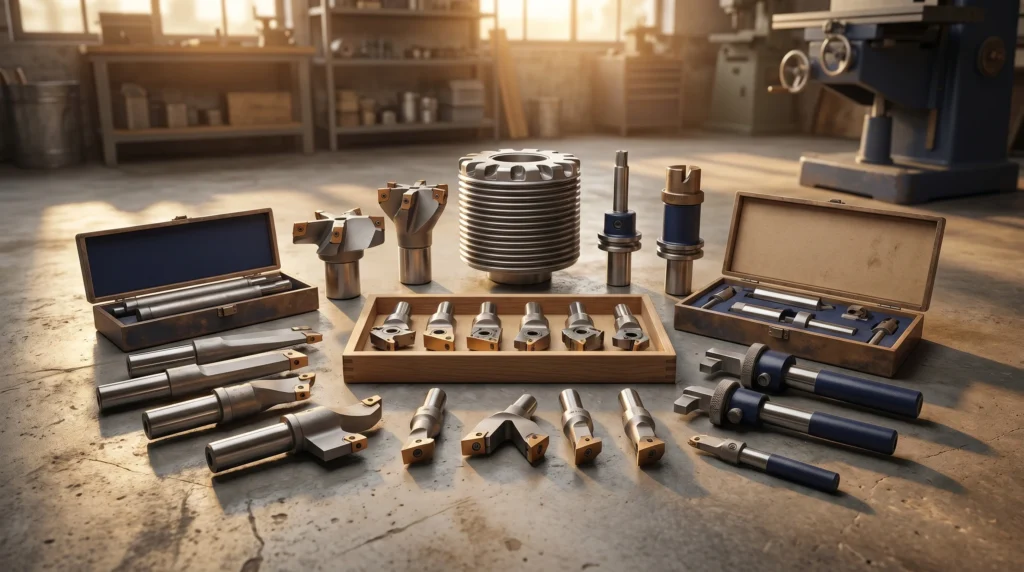
Shaper tooling is one of the most versatile categories in a woodworking shop, and getting it right can mean the difference between clean, consistent profiles and wasted stock, rework, and downtime. Whether you run a small custom cabinet shop or a high-volume millwork operation, understanding your shaper tooling options will help you work more confidently and efficiently. This overview walks through the main tool types available for shapers, when to reach for each one, and what to keep in mind when selecting or ordering.
What Is Shaper Tooling?
A shaper is a stationary machine that spins a vertical spindle at high speed. Cutting tools mount directly to that spindle — or to an arbor on it — and shape wood as it’s fed past the cutter. Because shapers are used for everything from simple edge profiles to complex door stiles and rails, the tooling options are broad. Choosing the right category of shaper tooling is the first step toward a safe, clean, and cost-effective operation.
Wing Cutters: The Everyday Workhorse
Wing cutters are solid-steel tools ground to a specific profile. They’re a go-to choice for shops that run consistent profiles in medium volumes. The steel body is durable, and with proper care and periodic sharpening, a quality wing cutter will hold up through a lot of lineal footage.
Wing cutters are ideal when you need:
- A single, repeatable profile run regularly
- A lower upfront cost compared to insert tooling
- Good surface quality on hardwood and softwood alike
Because the profile is ground directly into the body, resharpening does slightly alter the geometry over time. Keeping track of your profile specs and working with a reliable sharpening service — or sending cutters back to the manufacturer — is the best way to maintain accuracy.
Insert Cutters: Flexibility and Fast Changeovers
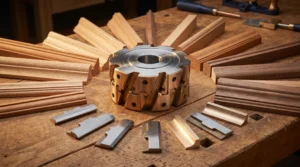
Insert cutters use replaceable carbide or steel inserts indexed into a cutter head body. When an insert wears or chips, you swap it out rather than resharpening the entire tool. This approach offers real advantages in shops that run multiple profiles or need to minimize downtime.
Key benefits of insert-style shaper tooling include:
- Fast, repeatable indexing — consistent profile every time an insert is changed
- Reduced grinding downtime; worn inserts are replaced, not resharpened
- The ability to re-use the same head body with different insert profiles
Insert systems work especially well in production environments where variety and uptime both matter. They tend to carry a higher initial cost than wing cutters but often deliver a lower cost per linear foot over their service life.
Corrugated Back Heads and Knives: Custom Profile Power
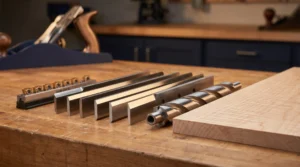
Corrugated back heads hold profile knives that are custom-ground to any shape you need. The corrugated pattern on the back of the knife locks it into the matching corrugations in the head, keeping it secure at speed. This system has been a standard in the industry for generations, and for good reason — it’s flexible, accurate, and well-suited to both standard and custom profiles.
This approach is the right call when:
- You need a profile that doesn’t exist as a standard catalogued cutter
- You’re matching existing millwork, replicating an architectural detail, or running a specialty moulding
- Custom knives can be ordered from a sketch, a wood sample, or a DXF file
CGG Schmidt has been grinding custom corrugated-back knives since 1926. If you can describe the profile — or better yet, send a sample — the team can produce knives that fit your existing heads or supply matched heads and knives together.
Groovers: Slots, Dadoes, and Panel Grooves
Groovers are specialized shaper cutters designed to cut clean slots and grooves — for cabinet backs, panel frames, tongue-and-groove joints, and more. They come in fixed widths or as stacked sets that let you dial in the exact groove width you need.
When selecting a groover for your shaper:
- Consider the depth and width range you’ll need across your product line
- Carbide-tipped groovers hold up much longer in engineered wood, MDF, and abrasive materials
- Stacking sets give you flexibility without the cost of multiple single-width tools
Groovers look simple but the quality of the grind and the concentricity of the tool have a direct impact on groove consistency. A well-made groover eliminates the need for secondary cleanup passes.
Cabinet and Entry-Door Cutter Sets
Door cutter sets are purpose-built combinations that produce the cope-and-stick joinery used in frame-and-panel cabinet doors and the more complex profiles found in entry doors. These sets are designed so the stile-and-rail profiles match perfectly — saving you the trouble of selecting and coordinating separate tools.
Cabinet door sets typically include a sticking cutter (for the inside edge profile and panel groove) and a coping cutter (for the end cuts on rails). The matched geometry means consistent, tight joints right off the machine.
Entry door sets step up the complexity. Entry door profiles tend to be larger, deeper, and more architecturally detailed. The tooling needs to handle heavier stock removal and often thicker lumber. CGG Schmidt offers both standard entry-door profiles and custom options for shops replicating historical or architect-specified designs.
Choosing the Right Shaper Tooling for Your Shop
No single tool type is best for every situation. A quick decision framework:
| Situation | Recommended Tooling |
|---|---|
| High-volume, single repeating profile | Wing cutter or insert cutter |
| Multiple profiles, quick changeovers | Insert cutter system |
| Custom or match-existing profile | Corrugated back head + knives |
| Grooves, slots, panel frames | Groover (carbide for sheet goods) |
| Frame-and-panel cabinet doors | Cabinet door cutter set |
| Entry doors, large architectural profiles | Entry door cutter set |
Beyond the tool type, pay attention to spindle bore size, rotation direction, and the maximum RPM rating of any tool you put on your machine. When in doubt, talk to the people who made the tooling.
Work With a Manufacturer Who’s Been Doing This Since 1926
CGG Schmidt has been producing shaper tooling — custom and standard — for shops across North America for nearly a century. Whether you need a matched set for a new door line, a custom corrugated knife ground to a sample you send in, or just a straight answer about which cutter fits your application, we’re glad to help.
Call us at 1-800-SCHMIDT or email [email protected]. Bring us your project — or just your questions — and we’ll point you in the right direction.