English
 Français
 Español
 Português
 中国人
中国人
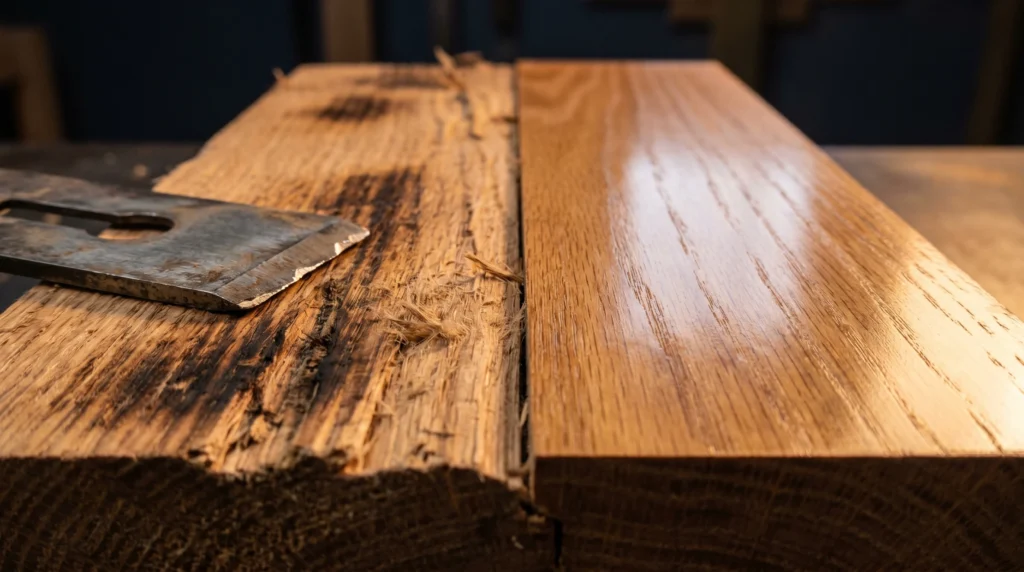
Dull cutting tools have a way of sneaking up on you. The decline is gradual, you adjust your workflow to compensate without realizing it, and eventually you’re running a machine that’s working twice as hard to produce results half as good. Recognizing the signs of dull woodworking tools early — before the problem compounds — saves time, material, and wear on your equipment.
Here are five clear signals that your cutting tools are overdue for a sharpen or grind.
1. Burning or Scorch Marks on the Wood Surface
This is the most visible sign, and one of the hardest to ignore once you know what you’re looking at. When a cutting edge is sharp, it removes material cleanly with minimal friction. When it’s dull, it drags across the wood surface instead of slicing through it — and dragging generates heat.
The result shows up as discoloration: a yellowish or brownish tinge on light-colored species, a darkened surface on denser hardwoods, or visible scorch marks on resinous species like pine and cherry. You may also smell it before you see it — a hot, slightly sweet or acrid smell that isn’t the normal scent of freshly cut wood.
The fix: Take the tool out of service and have it resharpened. Running a dull tool hotter isn’t just a surface quality problem — sustained heat affects the temper of the steel and can permanently reduce edge-holding performance.
2. Tear-Out and Lifted Grain
A sharp edge severs wood fibers. A dull edge compresses and tears them. The difference shows up most clearly as tear-out — areas where fibers have been lifted or broken out of the surface rather than cut cleanly, leaving a rough, pitted, or splintered texture.
Tear-out is especially pronounced when cutting against or across the grain, and in species with interlocked or wild grain like figured maple or walnut. While grain direction and feed rate both play a role, a sudden increase in tear-out on material you’ve been running without trouble is almost always a tooling signal.
The fix: Check the tooling before adjusting feed rate or cutting depth. A sharp edge in the correct geometry handles difficult grain far better than a dull one at any feed setting.
3. Fuzzy or Raised Grain on Planed Surfaces
Distinct from tear-out, fuzzy grain shows up as a surface that feels rough or bristly to the touch even though no chunks have been lifted. The fibers aren’t torn out — they’re bent over and not cut cleanly, leaving a surface that catches light unevenly and resists finishing.
This is a classic sign of planer or jointer knives that have lost their edge. You’ll notice it more on softer, open-grained species first — woods like pine, poplar, or alder, where the long fibers bend more readily than they break. In hardwoods, fuzzy grain often appears alongside a dulled surface sheen.
The fix: Sharpen or regrind your planer and jointer knives. Fuzzy grain from dull knives doesn’t sand out well — the fibers raise again when finish is applied, and the problem follows you through the finishing process.
4. Increased Feed Resistance or Machine Strain
When tooling is sharp, material flows through the machine at the correct feed rate with a smooth, consistent sound. When tooling is dull, the machine has to work harder to push the same material through at the same rate — and you’ll feel and hear it.
Signs to watch for:
- Feed rollers slipping or hesitating on material they used to handle easily
- A change in motor sound, particularly a heavier or more labored tone under load
- Material slowing noticeably as it enters the cut
- Increased vibration in the machine during the cut
In severe cases, a machine may bog down, trip a thermal overload, or leave inconsistent surface quality as the feed rate effectively varies through a single pass.
The fix: Don’t push through it. Increased resistance means more load on feed rollers, drive belts, and bearings — running dull tooling long enough will cost you in machine maintenance as well as tool life. Get the knives reground before you add equipment repair to the bill.
5. Poor Surface Finish That Extra Sanding Won’t Fully Correct
This one catches people off guard. You run material through the planer, the surface isn’t right, so you add more sanding passes — and the surface still doesn’t look or feel the way it should. That’s a sign the problem isn’t in the sanding; it’s in the cut.
Dull tooling leaves a burnished or slightly glazed surface on dense hardwoods, caused by the edge rubbing and compressing wood fibers rather than cutting them. That compressed surface layer doesn’t absorb finish evenly, can cause blotching, and shows up as uneven sheen under raking light even after heavy sanding.
Similarly, minor mill marks or ripple patterns — caused by the geometry of a cutting edge that’s lost its consistency — may not sand out fully because they’re impressed into the surface rather than sitting on top of it.
The fix: Address the tooling. A freshly ground knife produces a surface that’s cleaner from the start and accepts finish the way it should — which means less time at the sander and better results in the finishing room.
When in Doubt, Send Your Tools In
If you’re seeing one or more of these signs, it’s time to have your tooling evaluated by a professional grinder. At Charles G.G. Schmidt & Co., we’ve been sharpening and grinding woodworking cutting tools since 1926. Send us your planer knives, profiled molder knives, or any tooling that’s been giving you trouble — we’ll assess what you have and get it back to working condition. Call 1-800-SCHMIDT, email [email protected], or simply pack up the tools and ship them our way. Getting sharp again is easier than you think.